
The Beautiful Chaos of a Mother's Heart
My mom sent me a video last week with no context. Just a link and a single line: you need to watch this.
She was right.
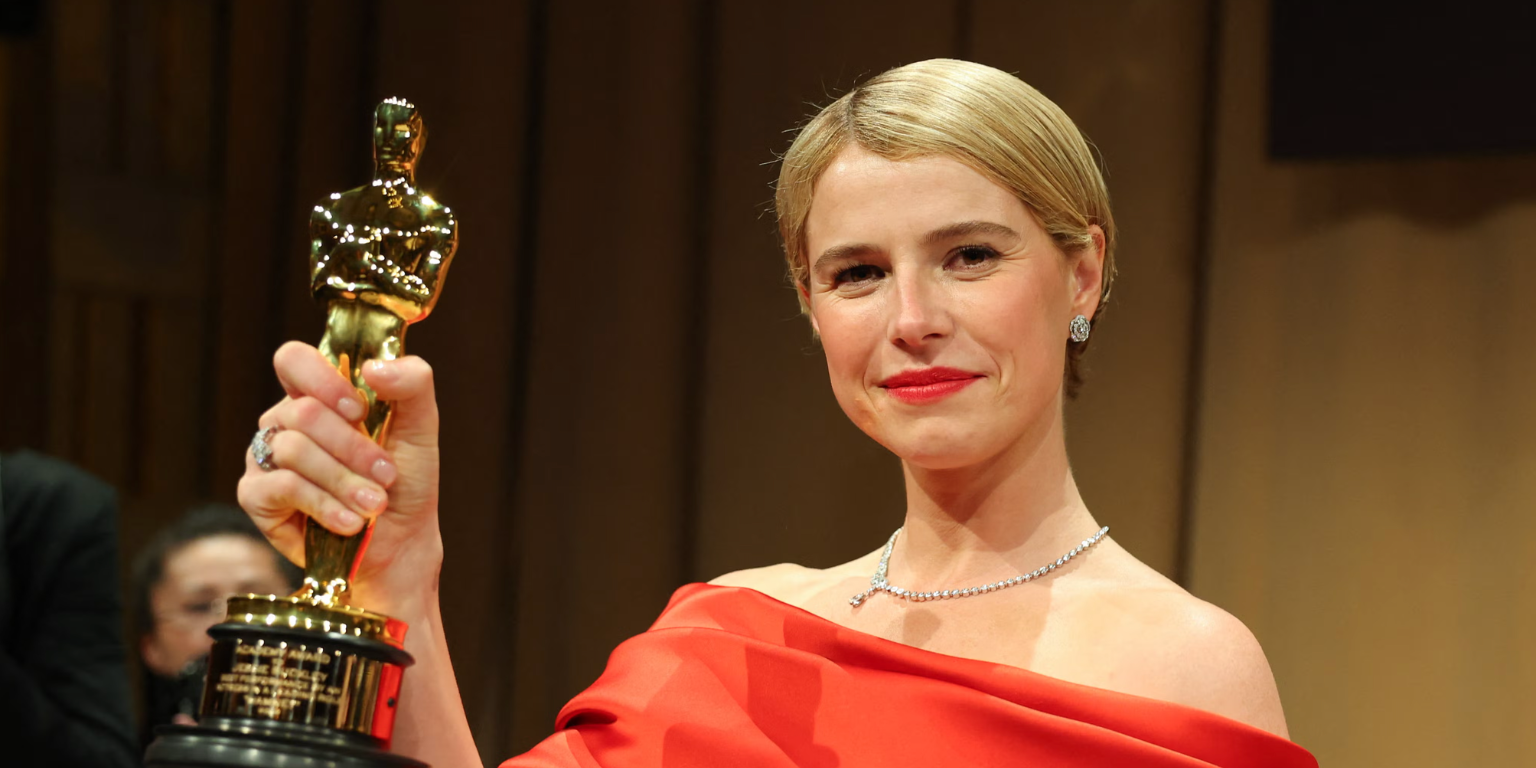
It was Jessie Buckley accepting the Oscar for Best Actress for her role in Hamnet. I hadn’t seen the film yet and I barely knew her name.
I watched it again, twice, before I did anything else.
The Academy Awards 2026 was Mother’s Day in the UK. Her eight-month-old daughter Isla was home and clearly had no idea what was happening in her mom’s world. Jessie said so herself: she was probably asleep dreaming of milk. And from that starry stage, in that ruby red and bubblegum pink Chanel gown, holding that statue, she dedicated her Oscar to the beautiful chaos of a mother’s heart.
I’ve been thinking about that phrase ever since. Not just the words, but the fact that my mom — Grandma Coco, as my girls call her — knew immediately that I needed to hear them.
My mother is not a woman who sends me many links to videos.
She went to Stanford University in the ‘60s, became a second grade teacher, and when she got pregnant with me, made the decision to orient her life around being a mother. Deliberately.
She became the CEO of our family with the same rigor she’d brought to everything else in her life, and built her world outward from that center. When her kids were grown and she eventually returned to Palo Alto, she landed back at Stanford, this time in the development office, and excelled there too.
Between her professional career or her dedication to horticulture and preservation of monarch butterflies or her desire to be everpresent in her granddaughters lives: the throughline, I can see now, is that she has always applied her full self to whatever container she was in.
She has never half-done anything. She’s just kept redirecting.
But I didn’t fully understand what she had modeled until I became a mother myself.
When I was living inside the repetition — the sameness of early caregiving that I’ve been writing about from the beginning of this essay series — I didn’t yet have language for what she had quietly been doing all those years.
She wasn’t ‘managing’ the chaos of motherhood. She wasn’t ‘optimizing’ around it. She was receiving it, fully, as the thing itself: the work, the point, and the place where her considerable capacity went.
I had to become a mother to see this. And then I had to spend several years becoming this kind of mother — the kind who stays inside the problem long enough for something to clarify — before I could really appreciate and integrate what she’d been showing me.
When she sent me that video, what she was really sending me was recognition. This is what I knew and couldn’t say. Someone finally said it.
That gesture — a mother reaching for her daughter with both hands full of someone else’s words — is its own small demonstration of the thing Jessie was describing.
The chaos doesn’t just live inside one heart. It moves between them.
I want to stay with the word Jessie used, because I think it’s more honest than the word we usually reach for.
She didn’t say beautiful balance. She didn’t say beautiful complexity or beautiful fullness or any of the softer framings we tend to offer mothers as consolation. She said, “to get to know this incandescent woman and journey to understand the capacity of a mother’s love is the greatest collision of my life”.
Collision. That’s precise. A collision implies two things meeting with force. It implies that neither thing yields entirely. There’s aftermath to a collision.
Jessie was standing on the biggest stage of her professional life, and her daughter was home dreaming of milk, and those two realities were not integrated into some graceful whole. They were colliding in her chest and heart and in real time. And she called that collision the dedication: the thing the whole night was for.
I’ve spent the last several months in this newsletter building a case for intentional presence in motherhood. Ritual containers. Micro-flow. The gamemaster who chooses her direction inside the chaos. And I stand behind all of it. The practice matters.
But Jessie’s speech pointed at something my ever-developing and evolving framework hadn’t fully named.
There is a category of motherhood experience that cannot be containerized.
It is not the diaper change you can ritualize, or the five-minute special time you can set a timer for. Rather, it’s the moment you’re doing something completely unrelated to your child — accepting an award, finishing a thought, sitting in a meeting — and the love hits you like a Texas thunderstorm in July.
It’s sudden and total and slightly absurd given the context.
I’ve had this happen in the middle of a pitch, an argument and once, memorably, in the middle of a flight where my daughter had to don a bedsheet ‘toga’ because she had vomited all over her clothes.
One minute I’m negotiating with a flight attendant about cleaning a bathroom, and the next I’m completely leveled by how much I love this ridiculous chaotic creature. And how I have no choice but to succumb to the chaos of the situation. The chaos arrives uninvited and, by some grace, I’m present enough to receive it instead of manage it.
This, I think, is what Grandfather-of-flow Csikszentmihalyi was circling when he described optimal human experience as being most alive in engaged, purposeful activity rather than passive rest.
Yet what Jessie named — and what my mom recognized and sent me at speed — is something slightly different. It’s the aliveness that arrives when you stop trying to engineer anything at all and simply let the collision happen.
The chaos is the love, at full voltage.
The practice I’ve been describing in this series — ritual containers, micro-flow, attuned presence in the small repetitive moments — doesn’t insulate you from the collision. That was never the point.
The point is that a mother who has practiced presence in five thousand small moments is more able to receive the big uninvited ones because she’s been training her nervous system to stay open. To let the love in even when the timing is absurd, even when she’s carrying her crying 4 year old through customs in a makeshift toga… or accepting a statue while her baby dreams of milk.
The practice builds the capacity and the capacity is what lets you call it beautiful instead of just calling it chaos.
Jessie ended her speech with this: we all come from a lineage of women who continue to create against all odds.
My mom is in that lineage. She applied her Stanford education to second grade classrooms and then to our family and then back to Stanford again, redirecting her full self into every container life offered her — long before anyone was writing newsletters about matrescence or micro-flow or the neuroscience of attuned caregiving.
She was just doing it: quietly, rigorously, completely.
She sent me a link to Jessie Buckley’s homage to motherhood at the Oscars 2026: that’s the lineage too. A mother who has lived the beautiful chaos for decades, recognizing it the moment someone finally names it, and reaching immediately for her daughter.
Coco, I see you in that lineage. I hope you know.
And Isla, eight months old, dreaming of milk — you have no idea what your mom just gave all of us.
-Maggie

Enjoyed this essay?
Subscribe to Soft Geometry for a thoughtful new reflection every week.


CONTACT
PRIVACY
© Mother of Invention