
GO BACK
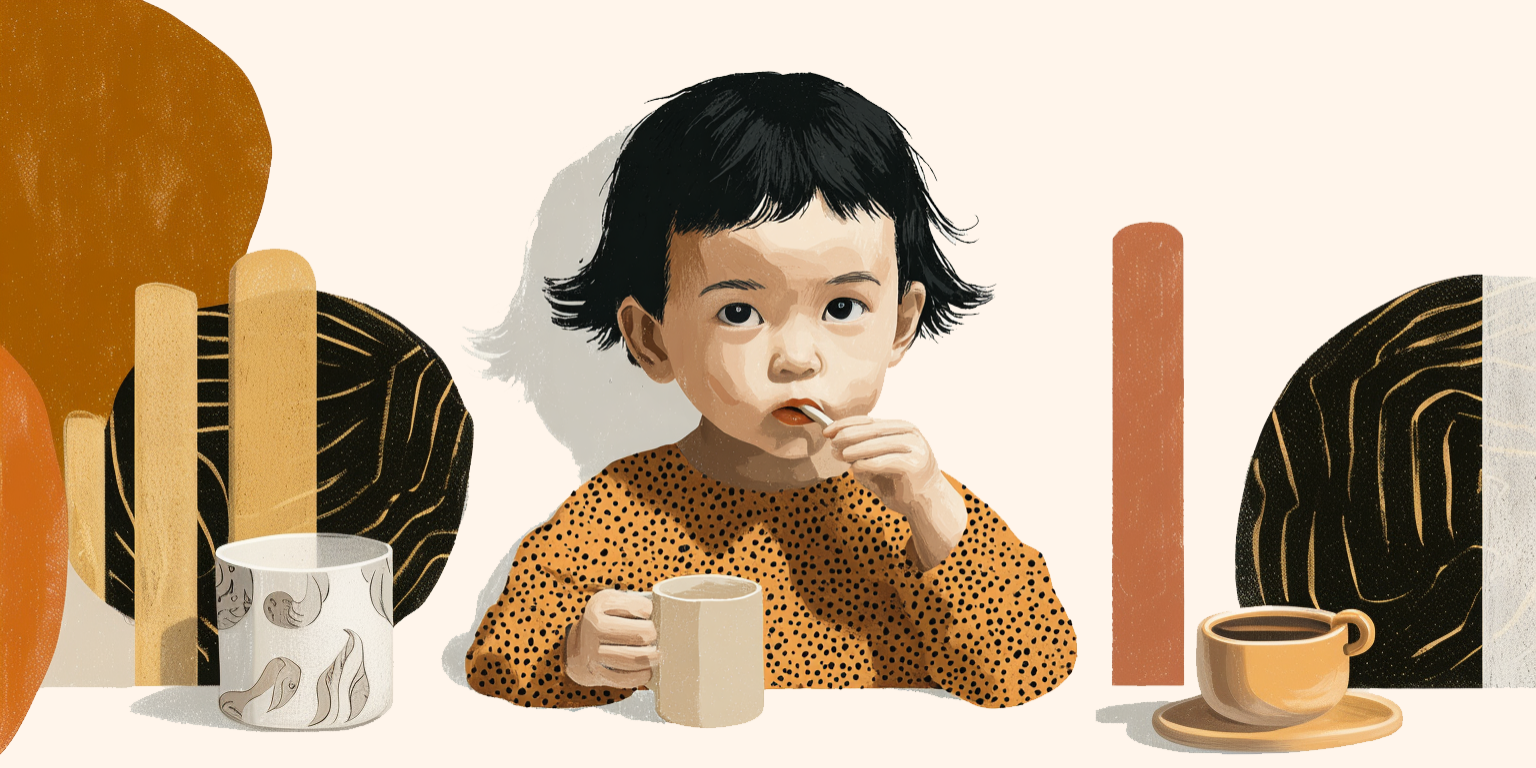
Vera touched her tongue to the rim of the first mug with the deliberation of a sommelier testing vintage, and something in her expression shifted, a recognition that moved across her face like wind across water, before she turned and crawled with surprising purpose to Chen, who sat reading the morning news on his tablet, and placed the mug carefully beside his knee.
"Thank you, dumpling," Chen said without looking up, his attention still caught in the scroll of headlines and weather predictions and traffic reports that promised to shape his day.
But Isabelle was watching now, really watching, the way she'd learned to watch her daughter in these eighteen months of life together, this education in attention that motherhood had forced upon her, teaching her to see patterns where before she'd seen only the blur of daily living, the rush from moment to moment without pause for consideration or wonder.
Vera returned to the coffee table where two mugs remained, and again that careful tasting, tongue meeting ceramic with the precision of scientific inquiry, before she selected the second mug and brought it not to Chen but to Isabelle herself, placing it in her mother's hands like an offering or perhaps like evidence in some investigation only Vera understood.
The third mug, Maya's, did not go to either of them; Vera nudged it toward the edge of the table as if marking it for elsewhere, a small clerk noting an item that would be claimed later.
"She's sorting them," Isabelle said, and even as she spoke the words they felt inadequate to describe what was happening, this strange taxonomy her daughter had developed, this system of classification that relied not on sight or sound but on taste, on whatever information lived in the molecular signature of handled things, objects marked by the oils and salts and microscopic debris of human contact.
Chen stood and began gathering items from around their small apartment, his wallet from the counter, Isabelle's phone from the charging station, his keys from the hook by the door, her earrings from the bathroom sink, and scattered them across the living room floor like a puzzle waiting to be solved, and Vera approached this challenge with the same methodical attention she brought to all her investigations, touching her tongue to each object in turn, reading them like braille, like code, like some language written in taste that only she could decipher.
Every object found its owner, every item returned to its rightful person with an accuracy that made Chen pull out his phone and start recording, taking notes in that app he used for work projects, because this was data now, this was a phenomenon that required observation, evidence of something that shouldn't be possible but was happening anyway in their living room on a Tuesday morning while the coffee grew cold and the light continued its slow march across the walls.
Isabelle watched her daughter work and thought about all the invisible ways we leave our mark, how every object we touch becomes encoded with our presence, how Vera had somehow learned to read this map of ownership that nobody else could see, this secret geography of belonging written in taste and touch and time.
Chen nodded slowly, making notes in his document, adding observations and theories and questions that multiplied faster than answers, and Isabelle could see him wrestling with the implications of what they were witnessing, this child who had developed a sense that went beyond the standard five, who had somehow learned to taste belonging itself.
But Isabelle found herself less interested in the mechanics of how it worked and more fascinated by what it revealed about the nature of possession, about the ways we leave ourselves on everything we touch, about how even the most ordinary objects become repositories of human presence, marked and claimed and transformed by the simple act of being held or used or loved.
She thought about her own mother's coffee mug, the one Isabelle still kept in the back of the cupboard three years after her death, and wondered if Vera could taste her grandmother's presence on the ceramic rim, if that particular signature of touch and time and care had survived the years of storage, waiting to be recognized by someone with the ability to read such things.
When her mother-in-law visited the following week, Isabelle found herself conducting an experiment without quite meaning to, placing several items on the coffee table, some that had belonged to Chen's father, who'd died when Chen was young, mixed among newer possessions, and watching as Vera worked through them with her usual careful attention, and when she picked up an old watch and crawled directly to Chen's mother, placing it in her lap with a certainty that made the older woman's eyes fill with tears, Isabelle understood that what Vera was reading went beyond simple ownership into something closer to inheritance, to the way love and memory and connection leave traces that persist long after the original touch has faded.
"She gave his watch to you," Isabelle said softly, and Chen's mother nodded, unable to speak, holding the timepiece that her daughter-in-law had never seen before, that had been stored away in a box of things too precious to use but too important to discard.
That night, after Vera was asleep and the apartment had settled into its evening quiet, Isabelle found herself moving through their rooms with new awareness, touching objects with intentionality, thinking about the signatures she was leaving, the marks of presence she was making on the material world that surrounded them, and she wondered what future daughter or granddaughter might someday taste these traces, might read in the handle of a favorite mug or the corner of a well-loved book the story of a woman who had lived here, who had touched these things with care and attention and the accumulation of small daily gestures that added up to a life.
Chen found her standing in Vera's doorway, watching their daughter sleep in the dim glow of the nightlight, and he understood without asking what she was thinking about, because he'd been thinking about it too, about the way their daughter had taught them to see the invisible architecture of belonging, that linked present to past and person to object and memory to the physical world in ways they'd never noticed before.
"She's teaching us something," Isabelle whispered, and Chen nodded, his hand finding hers in the darkness, and they stood together in the doorway watching their daughter breathe in the rhythm of deep sleep, this child who had somehow learned to read the world in a way that revealed truths they'd been too busy to notice, too distracted to understand, too grown-up to believe were possible.
The Tasting Detective
By Boris Mercier
Isabelle noticed it first on a Tuesday morning when the light was coming in sideways through the kitchen window, catching dust motes in their slow rotation, and Vera had crawled to the coffee table where three coffee mugs sat cooling in various states of abandonment, one belonging to Chen, one to Isabelle, and one to Maya who had stopped by the night before.
Vera touched her tongue to the rim of the first mug with the deliberation of a sommelier testing vintage, and something in her expression shifted, a recognition that moved across her face like wind across water, before she turned and crawled with surprising purpose to Chen, who sat reading the morning news on his tablet, and placed the mug carefully beside his knee.
"Thank you, dumpling," Chen said without looking up, his attention still caught in the scroll of headlines and weather predictions and traffic reports that promised to shape his day.
But Isabelle was watching now, really watching, the way she'd learned to watch her daughter in these eighteen months of life together, this education in attention that motherhood had forced upon her, teaching her to see patterns where before she'd seen only the blur of daily living, the rush from moment to moment without pause for consideration or wonder.
Vera returned to the coffee table where two mugs remained, and again that careful tasting, tongue meeting ceramic with the precision of scientific inquiry, before she selected the second mug and brought it not to Chen but to Isabelle herself, placing it in her mother's hands like an offering or perhaps like evidence in some investigation only Vera understood.
The third mug, Maya's, did not go to either of them; Vera nudged it toward the edge of the table as if marking it for elsewhere, a small clerk noting an item that would be claimed later.
"She's sorting them," Isabelle said, and even as she spoke the words they felt inadequate to describe what was happening, this strange taxonomy her daughter had developed, this system of classification that relied not on sight or sound but on taste, on whatever information lived in the molecular signature of handled things, objects marked by the oils and salts and microscopic debris of human contact.
Chen stood and began gathering items from around their small apartment, his wallet from the counter, Isabelle's phone from the charging station, his keys from the hook by the door, her earrings from the bathroom sink, and scattered them across the living room floor like a puzzle waiting to be solved, and Vera approached this challenge with the same methodical attention she brought to all her investigations, touching her tongue to each object in turn, reading them like braille, like code, like some language written in taste that only she could decipher.
Every object found its owner, every item returned to its rightful person with an accuracy that made Chen pull out his phone and start recording, taking notes in that app he used for work projects, because this was data now, this was a phenomenon that required observation, evidence of something that shouldn't be possible but was happening anyway in their living room on a Tuesday morning while the coffee grew cold and the light continued its slow march across the walls.
Isabelle watched her daughter work and thought about all the invisible ways we leave our mark, how every object we touch becomes encoded with our presence, how Vera had somehow learned to read this map of ownership that nobody else could see, this secret geography of belonging written in taste and touch and time.
"It's not just our things," Isabelle said one evening after Vera had correctly identified which sippy cup belonged to her friend Maya's son, though the cups were identical and had been washed in the same dishwasher, subjected to the same heat and soap and sterilization that should have erased any distinguishing characteristics. "She's reading something deeper than surface residue."
Chen nodded slowly, making notes in his document, adding observations and theories and questions that multiplied faster than answers, and Isabelle could see him wrestling with the implications of what they were witnessing, this child who had developed a sense that went beyond the standard five, who had somehow learned to taste belonging itself.
But Isabelle found herself less interested in the mechanics of how it worked and more fascinated by what it revealed about the nature of possession, about the ways we leave ourselves on everything we touch, about how even the most ordinary objects become repositories of human presence, marked and claimed and transformed by the simple act of being held or used or loved.
She thought about her own mother's coffee mug, the one Isabelle still kept in the back of the cupboard three years after her death, and wondered if Vera could taste her grandmother's presence on the ceramic rim, if that particular signature of touch and time and care had survived the years of storage, waiting to be recognized by someone with the ability to read such things.
When her mother-in-law visited the following week, Isabelle found herself conducting an experiment without quite meaning to, placing several items on the coffee table, some that had belonged to Chen's father, who'd died when Chen was young, mixed among newer possessions, and watching as Vera worked through them with her usual careful attention, and when she picked up an old watch and crawled directly to Chen's mother, placing it in her lap with a certainty that made the older woman's eyes fill with tears, Isabelle understood that what Vera was reading went beyond simple ownership into something closer to inheritance, to the way love and memory and connection leave traces that persist long after the original touch has faded.
"She gave his watch to you," Isabelle said softly, and Chen's mother nodded, unable to speak, holding the timepiece that her daughter-in-law had never seen before, that had been stored away in a box of things too precious to use but too important to discard.
That night, after Vera was asleep and the apartment had settled into its evening quiet, Isabelle found herself moving through their rooms with new awareness, touching objects with intentionality, thinking about the signatures she was leaving, the marks of presence she was making on the material world that surrounded them, and she wondered what future daughter or granddaughter might someday taste these traces, might read in the handle of a favorite mug or the corner of a well-loved book the story of a woman who had lived here, who had touched these things with care and attention and the accumulation of small daily gestures that added up to a life.
Chen found her standing in Vera's doorway, watching their daughter sleep in the dim glow of the nightlight, and he understood without asking what she was thinking about, because he'd been thinking about it too, about the way their daughter had taught them to see the invisible architecture of belonging, that linked present to past and person to object and memory to the physical world in ways they'd never noticed before.
"She's teaching us something," Isabelle whispered, and Chen nodded, his hand finding hers in the darkness, and they stood together in the doorway watching their daughter breathe in the rhythm of deep sleep, this child who had somehow learned to read the world in a way that revealed truths they'd been too busy to notice, too distracted to understand, too grown-up to believe were possible.

Enjoyed this story?
Subscribe to Quiet Material for a delightful new story every week.


CONTACT
PRIVACY
© Mother of Invention