
The Myth of Free Time
Can a mother (or father) actually create the conditions flow when parenting? Not someday, in a pottery class or on a meditation retreat — but in the fragmented moments of early childhood caregiving?
The research says yes. But not in the way I originally thought.
Last week I made the case that ritual containers create conditions for micro-flow in motherhood. Today I want to dive deeper into the argument.
The Part Csikszentmihalyi Already Solved
When I first encountered flow theory through Steven Kotler’s work, I assumed flow required extended time and a domain where achievement was measurable. Kotler’s research — Navy SEALs, Olympic athletes, Fortune 500 executives — didn’t include mothers of babies, and I think he’d disqualify early caregiving on the grounds that it’s too repetitive, too interrupted, and not productive in measurable ways.
But Kotler built on the father of flow theory, Csikszentmihalyi, and Dr. C’s original framework was more expansive. In Finding Flow (1997), he documented that genuine absorption of flow state isn’t limited to extended, exceptional states, rather it’s available in ordinary activities, in brief windows, when the right conditions are present.
I’m calling these moments in the context of early childhood caregiving micro-flow: not his term, but a natural extension of his framework to a context he never studied.
What the Neurochemistry Actually Supports
Here’s where I want to be precise, because I’m not a scientist and I don’t want to overclaim.
I would like to make the argument that attuned, three-minute caregiving rituals can trigger the same neurochemical releases as any other flow experience. But is this statement validated by the research?
It isn’t. And that’s okay because the supported research turns out to be more interesting.
What the research does support: the neurochemical cascade Kotler documents (dopamine, norepinephrine, anandamide, endorphins, serotonin) is well-established for extended flow states. What hasn’t been directly studied is whether brief absorption states trigger the same cascade, a partial version, or something related but distinct. The research simply hasn’t gone there yet, to my knowledge.
But here’s the inference I’m willing to own: the brain’s reward circuitry doesn’t seem to require a minimum duration. It responds to conditions being met (challenge meeting skill, focused attention, immediate feedback) not necessarily to how long those conditions have been in place.
If that’s true, a three-minute caregiving ritual where everything aligns isn’t neurochemically disqualified just because it’s three minutes. I’d like to posit that a limited neurochemical cascade can activate… because I believe I’ve personally experienced it.
I just can’t point you to a study that proves it.
What I can point to: attuned caregiving generates its own neurochemical layer that flow research has never measured. When caregiver and infant are genuinely regulated together, oxytocin floods both nervous systems. It’s not the standard flow cascade, but it is additive when in micro-flow.
So the honest claim isn’t that a caregiving ritual has the same neurochemical cascade as a Navy SEAL experiences. It’s that attuned caregiving creates conditions where flow-adjacent neurochemistry can activate, and then adds something on top that a Navy SEAL never will experience.
Micro-flow —> attuned caregiving.
Neurochemicals in micro-flow (unmeasured) + neurochemicals in attuned caregiving (measured) = a research question nobody has thought to ask yet.
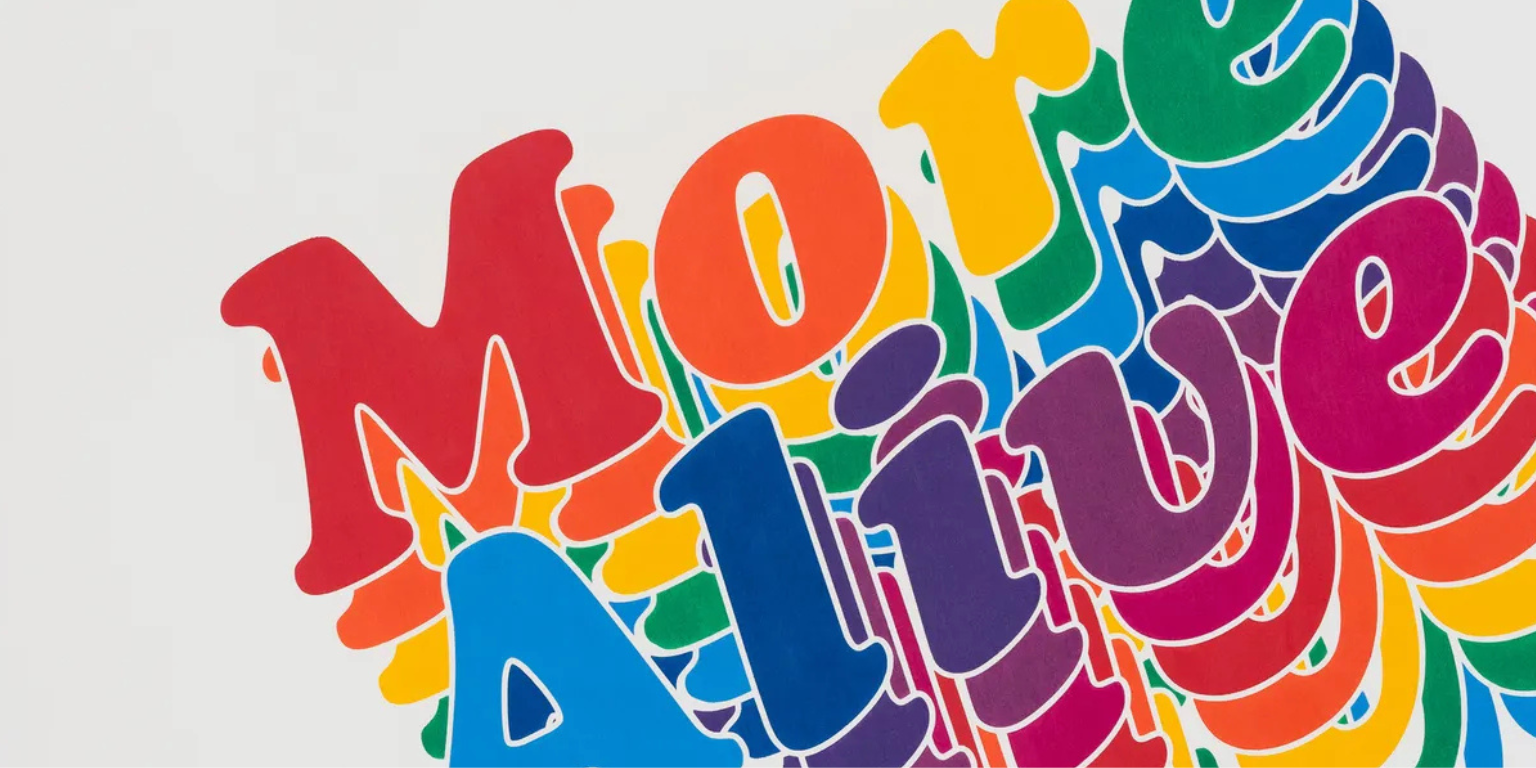
The Aliveness That’s Already Here
I want to talk about a potent and exciting paradox Csikszentmihalyi kept finding in his data: when people were asked what they wanted more of, they said leisure. But when they were actually measured during leisure (passive rest, television, scrolling) their happiness scores dropped.
Their highest reported well-being came during engaged, challenging, purposeful activity. Flow is where people feel most alive. Not rest.
Every mother of small kiddos I know wants more hours in the day: more time that is purely hers. That feeling is real and worth honoring (and I’ve had it a million times.)
But the data suggests the aliveness we’re chasing in those imagined free hours is already available in the hours we have. That’s not to say that parenting is easy or the hard parts aren’t REALLY hard, but because the conditions that generate that feeling — purpose, engagement, immediate feedback, something that actually requires you — are embedded in caregiving in a way they aren’t embedded in a lot of what we call rest.
Clearly motherhood contains the raw material for that feeling of “well-being” according to Dr. C. The question is whether we’re conscious enough to access it.
And here’s what I find quietly exciting about the micro-flow idea: if even a fraction of those micro-flow moments become more intentional, the accumulation doesn’t just add up.
It compounds. You’re not only experiencing more flow, but you’re training yourself to recognize and enter it more readily.
The practice builds the capacity.
Sources
Csikszentmihalyi, M. Flow: The Psychology of Optimal Experience (1990)
Csikszentmihalyi, M. Finding Flow (1997)
Kotler, S. The Art of Impossible (2021)
Feldman, R. The Neurobiology of Human Attachments. Trends in Cognitive Sciences (2017)



Enjoyed this essay?
Subscribe to Soft Geometry for a thoughtful new reflection every week.


CONTACT
PRIVACY
© Mother of Invention